


The key to genuine happiness isn't being what others expect of us; it's being our most authentic selves on the bike. Embrace your own rhythm, celebrate your strengths, and don't compare yourself to anyone else.
Happiness isn't a finish line, but the path you take, and you'll only be truly happy when you have the courage to be yourself, on your own path, on your own adventure.
Type and hit ENTER


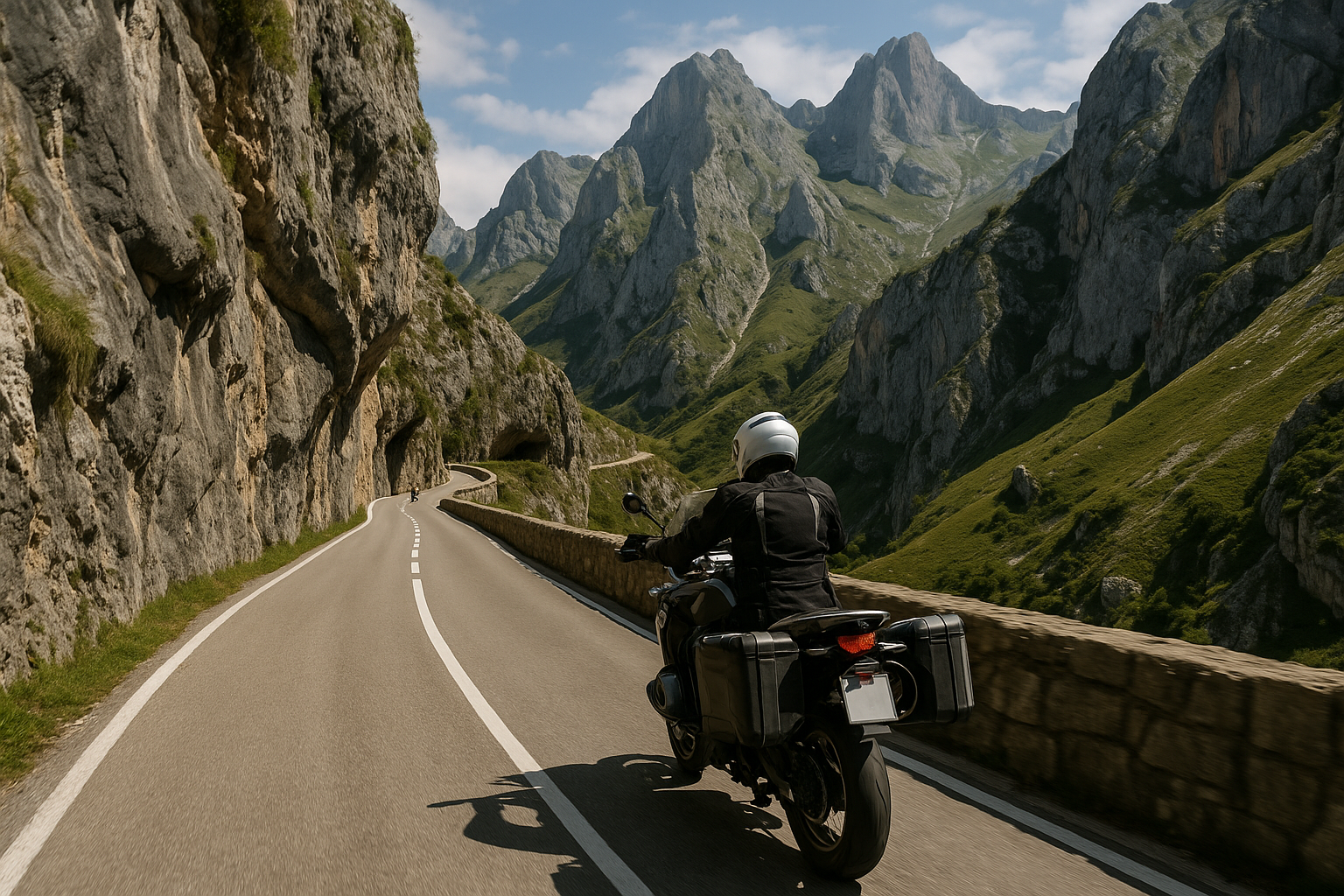
Travel to Spain 🇪🇸
Spain is a vibrant destination for motorcycle travelers, combining imposing mountain ranges, sunny coastal roads, endless plains and cities full of history. From the Basque Country to Andalusia, each route reveals a contrast of landscapes and cultures that make the trip unforgettable.
Capital: Madrid
Official Language: Spanish (Castilian)
Emergency Number: 112
Currency: Euro (€)
Card payments are widely accepted
Highway: 120 km/h
Road: 90 km/h
Urban Areas: 50 km/h
Spain, located on the Iberian Peninsula, is a country with a rich cultural and geographical diversity. In the north, the region of Galicia is known for its green and coastal landscapes, while the Basque Country and Navarre offer spectacular mountains and valleys. The central region, where Madrid is located, combines arid plains with historic cities such as Toledo and Segovia. In the east, Catalonia and Valencia are known for their beaches and vibrant Mediterranean culture. The south, dominated by Andalusia, is famous for its Moorish influences, with iconic cities such as Seville, Granada and Cordoba. The Balearic Islands and the Canary Islands are also part of the Spanish territory, offering different climates and paradisiacal landscapes.
Climate
Spain has several climates, from the Mediterranean climate on the east and south coasts, to the continental climate in the central areas and an oceanic climate in the north. Spring (April to June) and fall (September to October) are the best times to travel by motorcycle, when temperatures are milder and there are fewer tourists.
Languages
Although Castilian (Spanish) is the official language throughout the country, there are several co-official languages in different regions: Catalan in Catalonia and the Balearic Islands, Galician in Galicia, and Basque in the Basque Country and parts of Navarre. Each of these languages has great cultural and historical importance in their respective regions.
Driving
In Spain, you drive on the right-hand side of the road.
It is mandatory to wear gloves (for both the driver and passenger) and closed-toe footwear (boots, shoes, sneakers). Motorcycles must carry a high-visibility reflective vest (to be worn in the event of an accident), which is mandatory for professional drivers (such as delivery couriers, among others).
You may ride at up to 30 km/h on the right shoulder when traffic is congested on properly marked sections of road.
The road network in Spain is divided into freeways (Autopista – AP) and expressways (Autovia – A). The former are generally concessioned and have tolls, the latter are free.
There are two ways of paying tolls: manually, in cash or with a credit card; or automatically, by electronic toll with the help of an electronic device in the car that can be used on lanes marked “Telepeaje”, “VIA-T” or just “T”.
It is important to pay attention to speed signs, as the limits are strictly controlled.
Camping
Wild camping is generally prohibited in Spain, especially in protected areas and near beaches. However, there are numerous well-equipped campsites throughout the country, offering a legal and safe alternative for campers.
Biker Zones
Spain is a biker’s paradise, with several iconic routes. In the north, the Pyrenees Route and the Picos de Europa offer challenging curves and spectacular mountain scenery. The Andalusia Route is famous for its winding roads through picturesque white villages and mountainous areas. The Sierra de Tramuntana region of Mallorca in the Balearic Islands is another popular route, known for its incredible views of the Mediterranean.
Special Zones
In the main Spanish cities, such as Madrid and Barcelona, there are low-emission zones and areas with restricted access, especially in historic centers and tourist areas. It’s important to check local restrictions, as unauthorized access can result in fines.
Got something to correct or add? Contact us, become a Travel4Bikers contributor
Visiting a city in Spain
Make the most of it, See What to Do in 24 Hours In
Madrid – Barcelona – Picos Europa
Related Stories
No posts were found.



Spain - Travel4Bikers - Motorcycle Travel Information » Travel4Bikers - Motorcycle Travel Information