


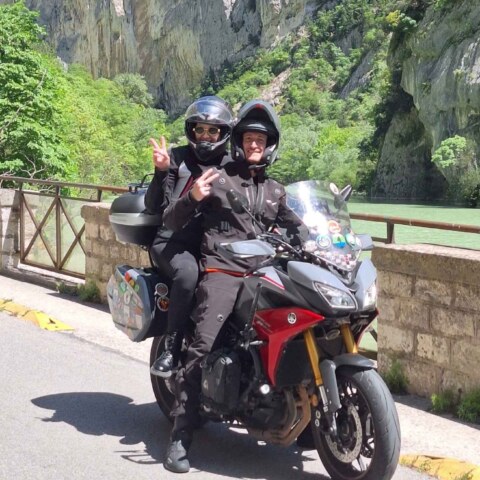
The key to genuine happiness isn't being what others expect of us; it's being our most authentic selves on the bike. Embrace your own rhythm, celebrate your strengths, and don't compare yourself to anyone else.
Happiness isn't a finish line, but the path you take, and you'll only be truly happy when you have the courage to be yourself, on your own path, on your own adventure.
Type and hit ENTER


Travel to France 🇫🇷
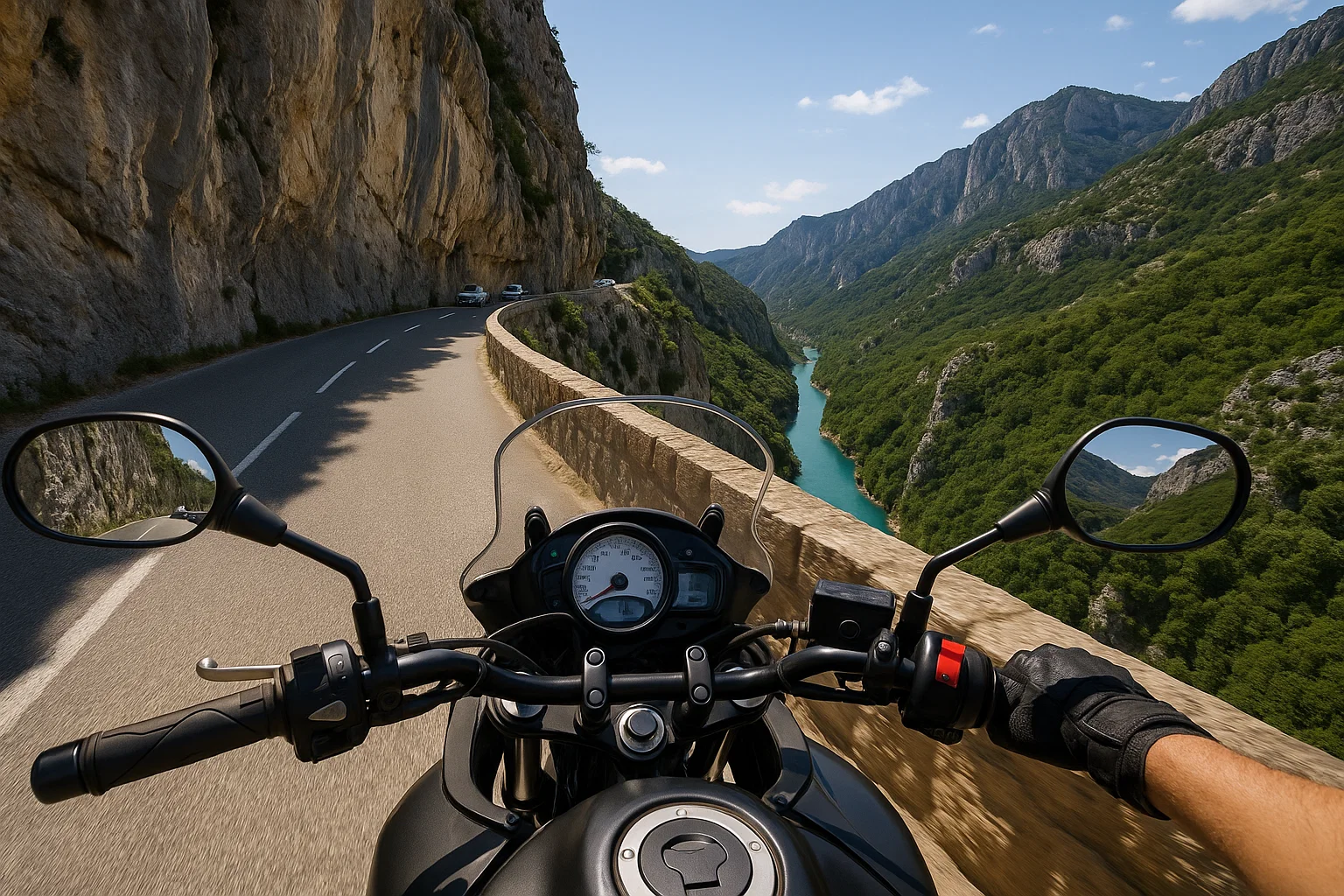
France is one of the most complete destinations for motorcyclists, offering everything from Alpine curves and Pyrenean roads to Provençal landscapes, wine valleys, and the stunning Côte d’Azur. A diverse country, each region offers a new two-wheeled travel experience.
Capital: Paris
Official Language: French
Emergency Number: 112
Currency: Euro (€)
Card payments are widely accepted
Highway: 130 km/h
Road: 80-90 km/h
Locations: 50 km/h
France, located in Western Europe, is a country known for its rich history, culture, and geographic diversity. In the north, Normandy and Brittany are famous for their coastal cliffs and rural landscapes. The east is home to the Alsace region, known for its German-style towns and vineyards, while the southeast is dominated by the Alps, with mountain peaks and ski resorts. In the south, Provence offers lavender fields and a stunning Mediterranean coastline, while the southwest, with Bordeaux, is renowned for its wines. Paris, the capital, is the country’s cultural and political center, known worldwide for its historical monuments, museums, and cosmopolitan lifestyle.
Climate
France has a variety of climates: the north and west have an oceanic climate with cold winters and moderate summers; the south has a Mediterranean climate with hot, dry summers; and the east, especially in the Alps, has a continental climate with harsh winters. Spring (April to June) and early autumn (September to October) are the best times to travel by motorcycle, when the weather is pleasant and the scenery is at its best.
Languages
Although French is the official language throughout France, several regional languages are spoken in different areas, such as Breton in Brittany, Occitan in the south, and Alsatian in Alsace. These languages are primarily spoken by older generations, but they still have a significant cultural impact.
Driving
In France, you drive on the right side of the road.
The country has a vast network of highways, many of which are tolled. Tolls can be paid at manual payment stations, with bank cards, or through electronic devices such as “Télépéage.” In cities, parking can be limited and expensive, especially in downtown areas.
Motorcycle and motorbike drivers are required to wear gloves at all times. The fine is 68€.
Reflective vests are mandatory for both passenger vehicles and motorcycles—they must be worn whenever the driver exits the vehicle. The fine is 135€ (90€ if paid immediately). This requirement also applies, in principle, to foreign drivers.
Camping
Wild camping is generally prohibited in France, but there are some exceptions in remote areas, as long as you obtain permission from the landowner. However, the country offers a wide variety of campsites, from the simplest to the most luxurious, making life easier for campers.
Biker Zones
France offers several spectacular routes for motorcyclists. The French Alps are famous for their mountain roads and incredible views, especially the Route Napoleon. The Provence region, with its winding roads and lavender fields, is another popular route. For those seeking a coastal experience, the Corniche d’Or, along the French Riviera, offers stunning views of the Mediterranean.
Special Zones
In the French cities of Angers, Annecy, Annemasse, Bayonne, Bordeaux, Caen, Chambéry, Clermont-Ferrand, Dijon, Grenoble, Le Havre, Lyon, Lille, Marseille, Montpellier, Nancy, Nantes, Nice, Nîmes, Paris, Pau, Reims, Rennes, Rouen, Saint-Étienne, Strasbourg, Toulouse and Tours have low-emission zones, usually in the center, where vehicle access is restricted. (The list of cities continues to grow)
On this website you can find a general map of the zones in France and a more detailed one area by area – www.frenchemissionssticker.com
Mesmo as viaturas estrangeiras têm de adquirir a vinheta que dá para o país inteiro, obtém-se através do site www.certificat-air.gouv.fr. The price of the sticker is €4.91, including postage.
Fines of €68 and €135 (€45/€90 if paid within 15 days)
Related Stories
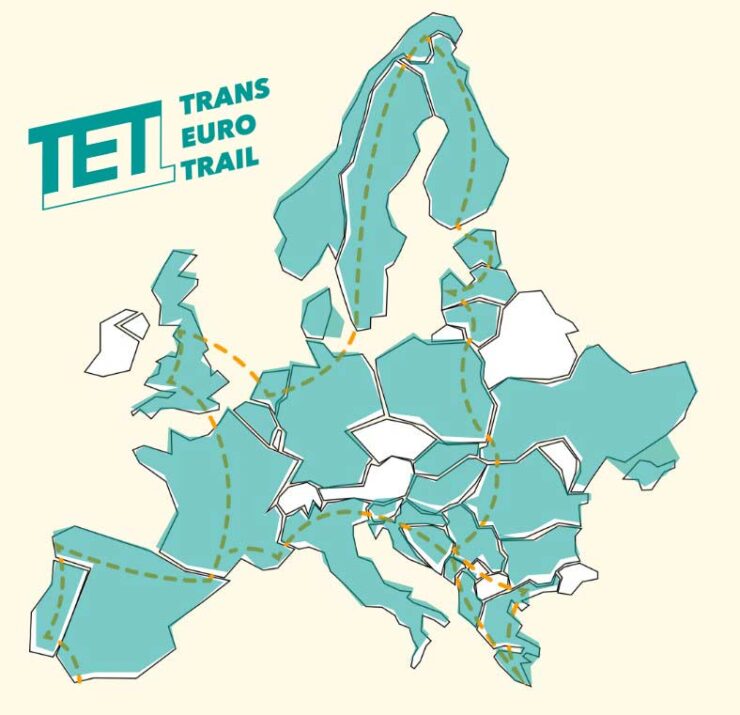
The Trans Euro Trail (TET) is a vast network of trails that stretches over 100,000 km and crosses more than 30 European countries, from the tip of Africa to the Arctic Circle. The TET is a colossal project, driven by the community and a passion for discovering Europe in a way that most tourists can’t even imagine.
September 7, 2026



France - Travel4Bikers - Motorcycle Travel Information » Travel4Bikers - Motorcycle Travel Information